Child Development Milestones: Understanding the Journey from Infancy to Adolescence
Contents
hide

Infancy (0-12 months):
The first year of life is a period of rapid growth and discovery. During this time babies make significant achievements in various fields.
Physical Milestones:
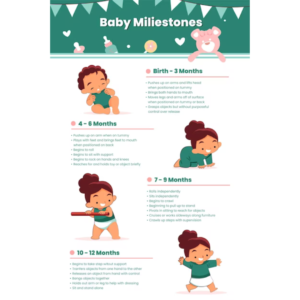
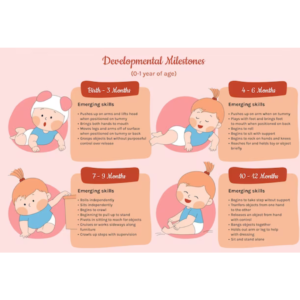
Birth to 3 months: Babies can lift their heads while lying on their stomachs, grasp objects with their hands, and begin to smile reactively.
4 to 6 months: Turning over, sitting up with support and exploring objects with your mouth are some of the milestones seen at this stage.
7 to 9 months: Crawling, pulling up to stand, and transferring objects from one hand to the other are common milestones.
10 to 12 months: Many babies begin to walk with support or take their first independent steps, and become more mobile.
Cognitive Milestones:
Birth to 3 months: Babies begin to recognize familiar faces and follow moving objects with their eyes.
4 to 6 months: They show interest in mirrors, respond to their names, and engage in simple games like peek-a-boo.
7 to 9 months: Object permanence develops, meaning they understand that objects are still present even when out of sight.
10 to 12 months: Babies mimic gestures, recognize familiar objects, and understand simple instructions.
Physical Milestones:
12 to 18 months: Babies usually start walking independently and can start climbing stairs with support.
18 to 24 months: They can run, kick a ball, and begin to master fine motor skills like stacking blocks.
24 to 36 months: Jumping, jumping and writing with a crayon are some of the motor milestones during this stage.
Cognitive Milestones:
12 to 18 months: Babies begin to identify, point to, and name familiar objects and body parts.
18 to 24 months: They develop a sense of cause and effect, pretend and enjoy simple stories.
24 to 36 months: Their vocabulary grows rapidly, and they begin to form short sentences.
Emotional and Social Milestones:
12 to 18 months: Young children may experience separation anxiety and seek comfort from caregivers.
18 to 24 months: They begin to show empathy and mimic the behavior of others.
24 to 36 months: Collaborative play emerges, and they begin to understand others’ basic feelings.
Preschool Years (3-5 Years):
The preschool years are a time of tremendous growth and development in all areas.
Physical Milestones
3 to 4 years: Children refine their gross motor skills and become more coordinated in running, jumping, and balancing.
4 to 5 years: Fine motor skills improve, allowing them to make recognizable shapes and use utensils more efficiently.
Cognitive Milestones:
3 to 4 years: Language skills progress, and children engage in elaborate pretend play, creating imaginative scenarios.
4 to 5 years: They develop a sense of timing and sequence, sort objects by shape and color, and show an interest in counting.
Physical Milestones:
6 to 7 years: Children refine their motor skills and become more involved in sports and physical activities.
7 to 8 years: Hand-eye coordination improves, enabling them to engage in activities requiring greater precision.
6 to 7 years: Friendships become more important, and children may experience occasional conflict with peers.
7 to 8 years: They become more aware of their strengths and weaknesses, and their self-esteem is affected by school performance.
Pre-adolescence (9-12 years):
Pre-adolescence is a transitional period marked by significant physical and emotional changes.
Physical Milestones:
9 to 10 years: Growth spurts and physical changes may be more noticeable, especially in girls.
10 to 12 years: Fine motor skills continue to develop, and they gain more control over their bodies.
Cognitive Milestones:
9 to 10 years: Abstract thinking and problem-solving abilities improve, allowing for more complex reasoning.
10 to 12 years: They begin to think critically and question ideas, forming their own opinions and attitudes.
Physical Milestones:
13 to 14 years: Puberty begins, and teens experience significant physical changes such as growth spurts and hormonal shifts.
15 to 18 years: They continue to mature physically, with girls generally reaching physical maturity earlier than boys.

Conclusion:-
It is important to recognize and appreciate these milestones in order to provide proper support and guidance to children during their development. By understanding specific developmental patterns, parents and caregivers can identify potential delays or challenges and seek timely intervention if needed.
It’s important to remember that every child is unique, and development can vary from person to person. While milestones provide a general outline, children develop at their own pace, influenced by their environment, experiences, and genetic makeup.
As children move through different stages, they need a strong support system that includes parents, teachers, counselors and peers. Open communication, empathy, and active listening play an important role in helping children deal with the challenges and triumphs that come with each developmental stage.
In this lifelong journey of development, let us celebrate each step of development and encourage children to explore their innate abilities and passions. By investing in the well-being and development of the next generation, we contribute to building a healthier, kinder and brighter future for our children and society as a whole.
Thank You For Reading this Article
To Know More Interesting Articles Please Click on the Below Link
https://smartkid.searchinfography.com/