Introduction :-
Bhagat Singh Revolutionary Martyr:
Explore the life and legacy of Shaheed Bhagat Singh, the iconic revolutionary who played a key role in India’s freedom struggle. Learn about his early life, revolutionary activities, ideologies and lasting impact on the nation.
Bhagat Singh: Revolutionary Martyr, a name etched in the history of India’s freedom struggle, stands as a symbol of courage, sacrifice and unwavering dedication. This article throws light upon the life, ideologies and remarkable contributions of Bhagat Singh, and highlights his important role in shaping India’s journey towards independence.
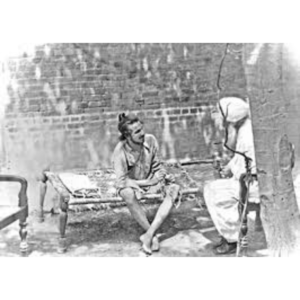
Bhagat Singh:
The Early Years Bhagat Singh, who was born in 1907 in Punjab, India, belonged to a family with a patriotic history. The exposure to the sacrifices made by his family members ignited his passion for India’s independence. As a young boy, he imbibed the essence of nationalism and set the stage for his revolutionary journey.
 Spark of Revolution:
 Spark of Revolution:
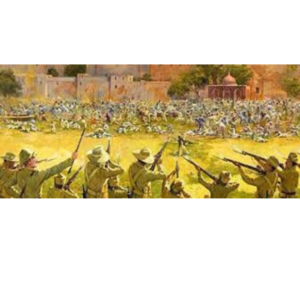
 From Jassacre at Jallianwala Bagh in 1919 and the subsequent atrocities on Indians under Britisallianwala Bagh to Non-Cooperation. The mh rule deeply affected Bhagat Singh. The non-cooperation movement under the leadership of Mahatma Gandhi further fueled his determination to bring radical changes in his country.
Joining the Hindustan Socialist Republican Association (HSRA):
A turning point in Bhagat Singh’s path to revolution came when he joined the HSRA, a revolutionary organization committed to the overthrow of British rule through armed resistance. His association with like-minded comrades marked the beginning of a more intense phase in his fight for independence.
Ideologies and Actions :
 Ideologies and Actions :
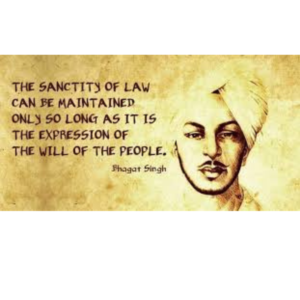
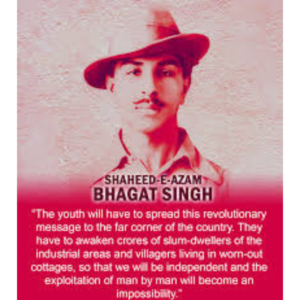
Advocacy of non-violence and strong stand Bhagat Singh’s ideologies were rooted in both nationalism and socialism. He believed in the power of nonviolence but also recognized the need for a more assertive approach to challenging the British oppressors. His famous quote, “They can kill me, but they cannot kill my thoughts,” expresses his indomitable spirit.
Assembly Bombing and Beyond:
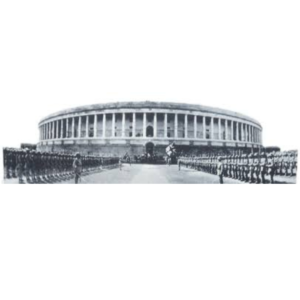
In 1929, Bhagat Singh and Batukeshwar Dutt threw non-lethal bombs in the Central Legislative Assembly with the aim of protesting the repressive laws. His actions were aimed at awakening the conscience of the nation and sending a strong message to the British rulers.
Lahore Conspiracy and Execution
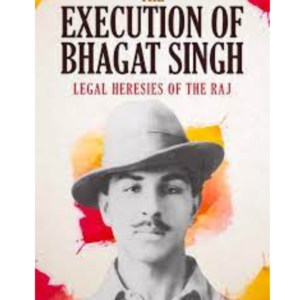
Bhagat Singh was tried because of the Lahore Conspiracy Case arising out of the Assembly bombing. Despite knowing the consequences, he refused to plead for mercy and on March 23, 1931, was hanged with unmatched bravery. His sacrifice became a defining moment in India’s fight for independence.
Lasting Legacy:
inspiration for generations Bhagat Singh’s legacy will continue to inspire generations, inspiring those who seek justice, equality and freedom. His life story instills courage and belief that individuals can make a profound impact on society despite insurmountable odds.
Cultural and Cinematic Influences :
Bhagat Singh’s life has been the subject of many books, documentaries and films. His story has not only been preserved in historical texts, but has also been celebrated through various forms of art and media, ensuring that his ideals live on in the hearts of people.
FAQs
1. Question: Was Bhagat Singh a Gandhian follower?
Answer: While Bhagat Singh respected Mahatma Gandhi, his ideology leaned more towards armed resistance as a means of achieving independence.
2. Question: What was the role of Bhagat Singh in the Hindustan Socialist Republican Association?
Answer: Bhagat Singh was a prominent member of the HSRA and was instrumental in planning and executing revolutionary activities.
3. Question: What was the impact of the hanging of Bhagat Singh on the freedom movement?
Answer: The hanging of Bhagat Singh enthralled the country, fueled protests and instilled in Indians a determination to break free from British rule.
4. Question: What were the main ideologies of Bhagat Singh?
Answer: Bhagat Singh believed in nationalism, socialism and non-violence, although he also recognized the need for a more aggressive stand against British oppression.
5. Question: How did the works of Bhagat Singh influence the youth of his time?
Answer: Bhagat Singh’s fearlessness and commitment to the cause inspired countless young Indians to actively participate in the struggle for independence.
6. Question: What is the significance of Bhagat Singh’s legacy today?
Answer: Bhagat Singh’s legacy continues to inspire individuals to stand up against injustice, fight for their rights, and work towards a better society.
Conclusion:
The life of Bhagat Singh is a testament to the power of individual determination and the influence of one individual on the course of history. His unwavering spirit, ideology and sacrifice serve as guideposts for those who seek freedom, justice and a bright future for their nation.


 Click Here to Buy
I do not even know how I ended up here but I thought this post was great I dont know who you are but definitely youre going to a famous blogger if you arent already Cheers