Introduction :
Contents
hide
India’s Journey to the Moon, Space exploration has always captivated the imagination of humanity, and India has been no exception. In recent years, the Indian Space Research Organization (ISRO) has made significant progress in space exploration, most notably with the Chandrayaan mission. India’s lunar exploration program, Chandrayaan, has received international attention and praise for its ambitious goals and remarkable achievements. India’s lunar exploration program Chandrayaan has not only made significant contributions to scientific research but has also played an important role in advancing the country’s technological capabilities in space exploration. Here are some additional details about Chandrayaan that highlight its notable achievements and future endeavors.

1. Birth of Chandrayaan:
Chandrayaan India’s Journey to the Moon 1 & 2, which translates to “moon vehicle” in Sanskrit, began as a visionary dream of the Indian scientific community. The program’s objectives were to explore the Moon’s surface, study its geology, and uncover mysteries surrounding Earth’s closest celestial neighbor. With the successful launch of Chandrayaan-1 in 2008, India became the fourth country to send a mission to the Moon.

2. Achievements of Chandrayaan-1:
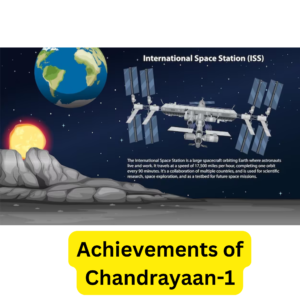
Chandrayaan-1 was a milestone in India’s space exploration history. Equipped with advanced scientific instruments, it accomplished several key objectives during its mission. It discovered water ice on the Moon’s surface, mapped its topography with high precision, and provided important insights into the Moon’s mineralogical composition. The mission’s findings expanded our understanding of the Moon and laid the foundation for future lunar explorations.
3. Impact of Chandrayaan-1:
India’s first lunar mission Chandrayaan-1 made a profound impact on our understanding of the Moon. One of its most important achievements was the discovery of water molecules on the surface of the Moon, which challenged previous assumptions and opened up possibilities for future manned missions. The mission also provided valuable insight into the Moon’s mineralogical composition, the presence of helium-3, and the existence of subsurface caves or lava tubes. Chandrayaan-1 operated for more than ten months and took thousands of high-resolution images of the Moon, increasing our knowledge of its topography.
4. Chandrayaan-2 a Giant Leap:
Building on the success of Chandrayaan-1, India launched the ambitious Chandrayaan-2 mission. Launched in July 2019, Chandrayaan-2 aimed to achieve a soft landing on the south-polar region of the Moon, a region that had never been explored before.


5. Components of Chandrayaan-2 Mission:
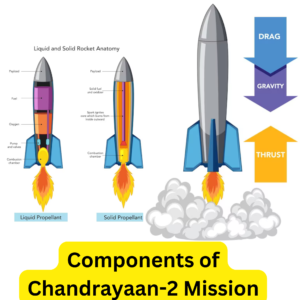
Chandrayaan-2, the most ambitious lunar mission ever undertaken, consisted of three major components: the orbiter, the Vikram lander, and the Pragyan rover. The orbiter, which continued to operate successfully even after communication with the lander was lost, played a key role in collecting scientific data and sending it back to Earth. It orbits the Moon and provides valuable information about its surface and atmosphere.
6. Objectives of Chandrayaan-2:
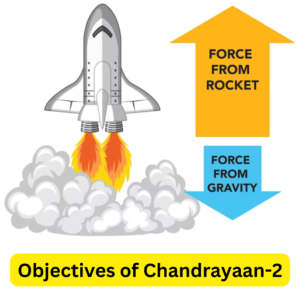
Chandrayaan-2 had several major objectives. One of the primary goals was to achieve a soft landing on the Moon’s surface near the South Pole region, where no previous mission had landed. The region is of particular interest because of the presence of water ice in permanently shadowed craters. The lander, Vikram, was equipped with instruments to study the thermal and seismic properties of the lunar surface. The Pragyan rover, designed to cover a distance of a few hundred meters, carried instruments to analyze the composition of the Moon’s soil and search for signs of water and minerals.
7. Vikram Lander Blow:
During the descent phase of Chandrayaan-2, moments before the intended soft landing, communication with the lander Vikram was lost. Despite the failure, the mission was widely hailed as a significant achievement that demonstrated India’s technological capabilities and brought the country closer to achieving a soft landing on the Moon. Lessons learned from the mission have provided valuable insights for future endeavors, ensuring further improvements in mission planning and execution.
 8. Challenges Faced for the Mission Chandrayaan 2:
Chandrayaan-2 faced a difficult challenge during its landing phase. Unfortunately, communication with the lander was lost just moments before landing. Despite this setback, the orbiter continued to function flawlessly and its scientific instruments continued to collect valuable data. The Chandrayaan-2 mission demonstrated India’s capability to undertake complex space missions and demonstrated the resilience of ISRO’s scientists and engineers.
9. Future Missions and Collaborations of Chandrayaan:
The Chandrayaan program has laid the groundwork for India’s future lunar missions. ISRO has already announced plans for Chandrayaan-3, which aims to make a successful soft landing on the lunar surface. With each mission, India continues to expand its knowledge of space, contribute to international scientific research, and inspire the next generation of scientists and engineers. ISRO has not been deterred by the challenges faced during the Chandrayaan-2 mission. The agency has already announced plans for Chandrayaan-3, which will aim for a successful soft landing on the lunar surface. Chandrayaan-3 will build on the technological advancements and scientific objectives of its predecessors. Additionally, ISRO is actively exploring collaborative opportunities with other space agencies and countries to enhance scientific research and share resources for future lunar missions.

10. Inspiration to the Youth:
Chandrayaan has made a profound impact on inspiring the youth of India to pursue careers in Science, Technology, Engineering, and Mathematics (STEM). The mission has ignited a passion for space exploration, fostered a generation of scientists and engineers eager to contribute to India’s space program, and push the frontiers of knowledge.
Conclusion:
Chandrayaan India’s Journey to the Moon is a testimony to India’s growing prowess in space exploration. The program has pushed the frontiers of scientific knowledge, ignited the country’s curiosity about the universe, and cemented ISRO’s place among the world’s leading space agencies. As India advances to new frontiers in space, Chandrayaan serves as a reminder of the indomitable spirit of exploration that drives human progress. With each mission, India brings us closer to unlocking the secrets of the universe and reinforces the idea that the sky is no longer the limit. Chandrayaan’s journey remains a source of pride for India and a testimony to the country’s commitment to scientific advancement. As future missions unfold, India’s lunar exploration program will undoubtedly contribute significantly to our understanding of the Moon and pave the way for further exploration and space exploration.

Thanks for Reading the Article, for More Interesting & Informative Blogs and Articles, Click on the Below Link
https://smartkid.searchinfography.com/
 To Buy Click on the Image
1 thought on “India’s Journey to the Moon – 2008 to 2019”